Laurie is away in Qld. visiting family and spoiling his grandkids, so pottered around the shed solo.
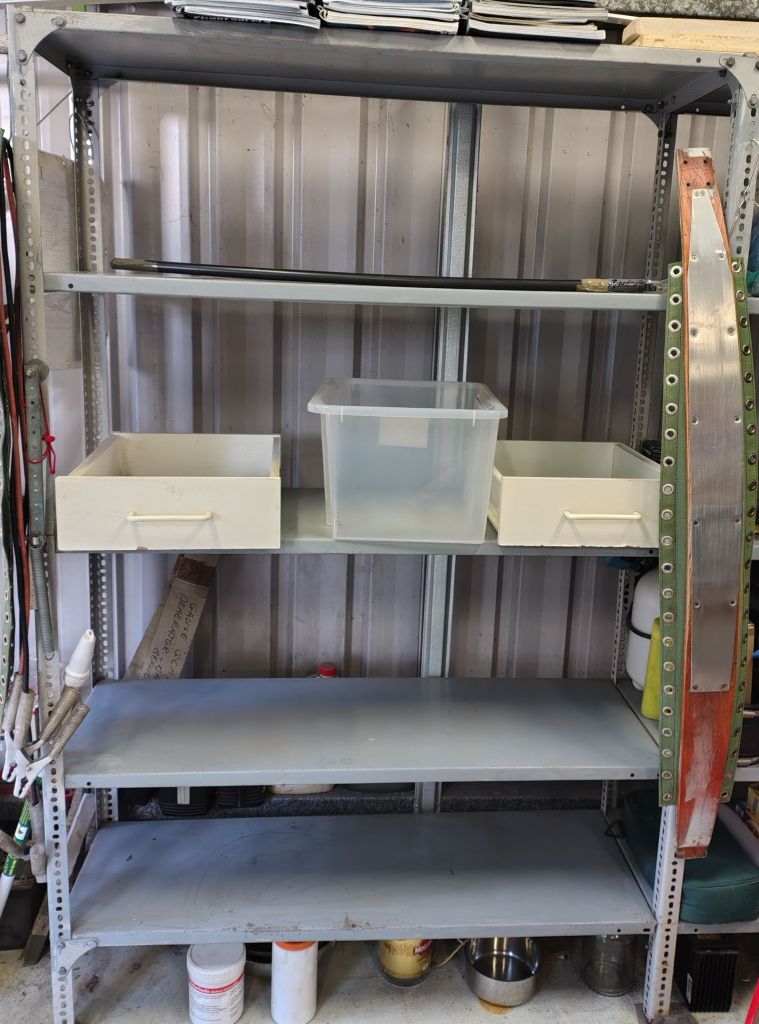
I sorted and cleaned a section of the storage shelves to create a dedicated KYU section which will NEVER be encroached upon by general stuff. In line with the “sterile cockpit” concept, I’d like to think this will be a “sterile storage area”. Note however that “sterile” in this context does NOT mean “sterilised”, although I’ll try my best to keep it as clean and tidy as possible.
I also did a bit more measuring up for our rotisserie project. The hoop is on order from Metal Shop Technics in Kurri Kurri and we should be able to pick it up by the time Laurie gets back.
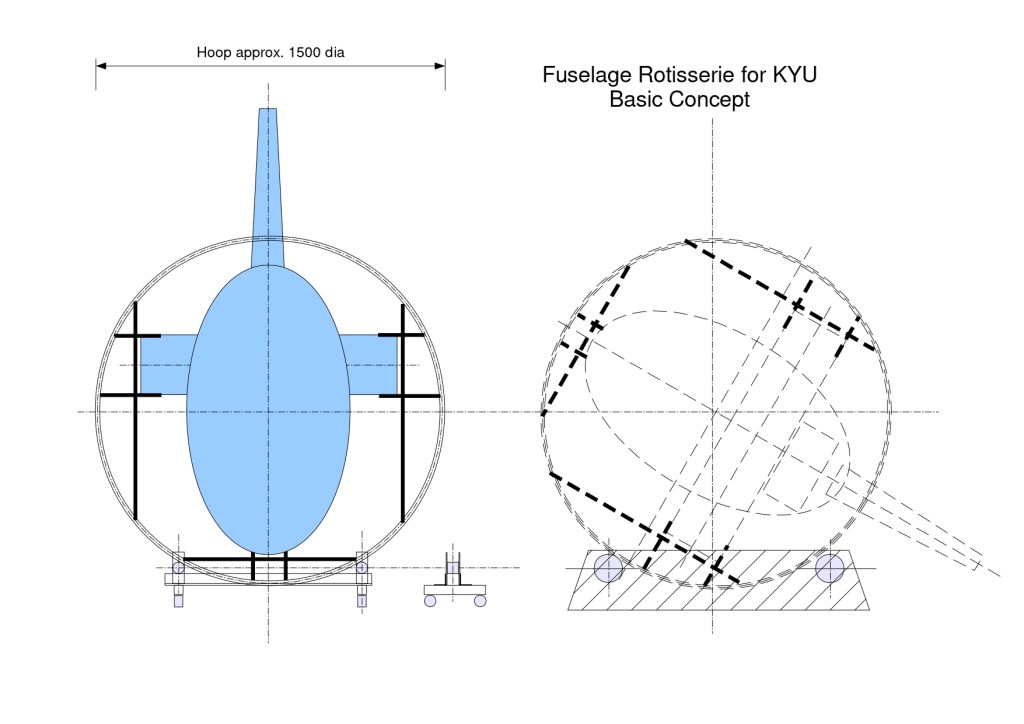
This will make life a lot more pleasant by allowing easier access to the entire fuselage. We’ve already identified a few minor wood repairs which will be much easier to accomplish when the fuselage can be rotated.
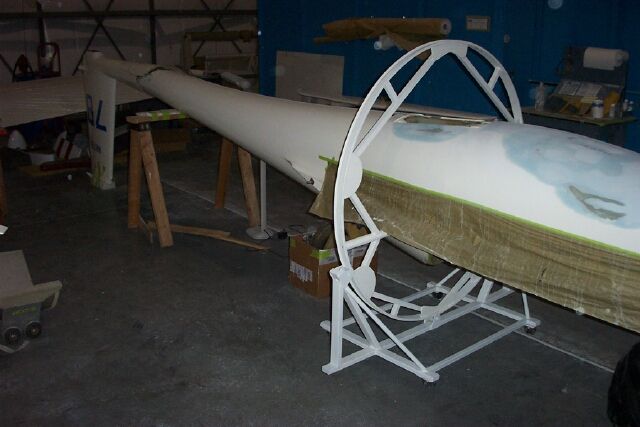
This is an example of a finished rotisserie in action.
Just before I decided to quit for the day, I thought I’d try Pete’s acetone paint stripping method.
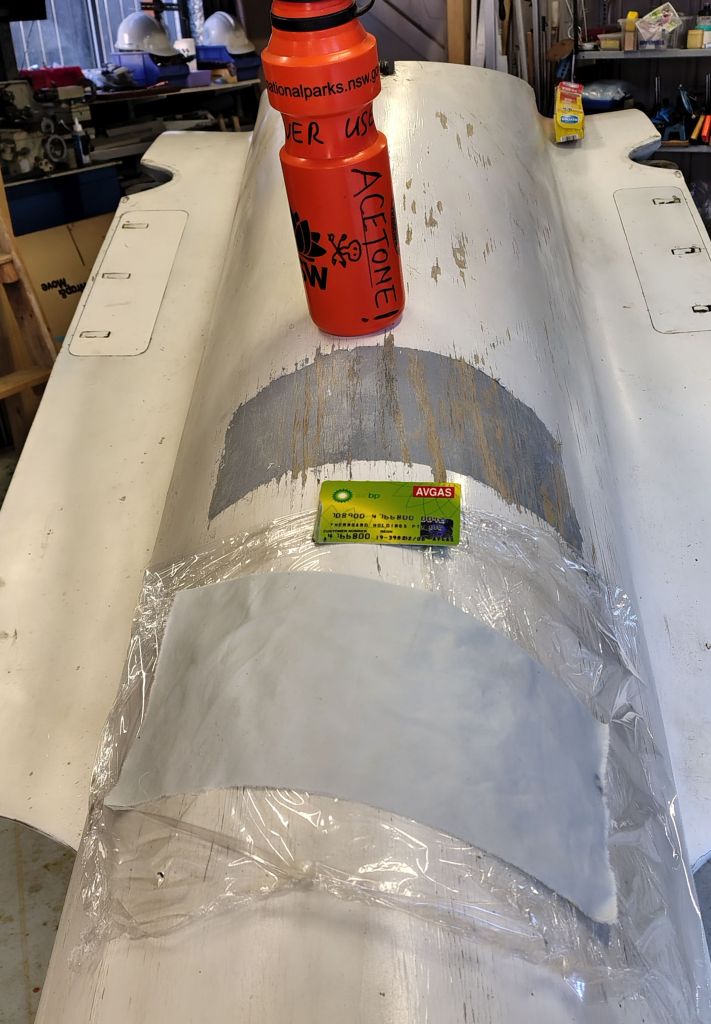
I never doubted that this would work, having established earlier that this paint does in fact come off with acetone.. What I didn’t expect was how ludicruously easy this is! Put the cloth down, dab a bit of acetone on which wicks beautifully all over the cloth without much overrun, then, and that’s the trick, cover IMMEDIATELY with gladwrap to slow down the evaporation of the solvent, which now has no option but to eat its way into the paint. About 3 or 4 minutes later, removed the gladwrap and cloth and I could see right away that the paint had completely shrivelled. A gentle scrape with a BP Avgas debit card and voila! no more paint on plywood.
Pete, your blood’s worth bottling! I now have to quizz him about the optimum size of cloth and length of dwell time under gladwrap so we don’t have to reinvent the wheel. He’ll also be able to advise us how much (if any) additional sanding is required before we can apply the first coat of (most likely) epoxy sealer.
 BOCIAN FLYERS
Leave a comment