So much for “just giving the fuselage a light sand…..”
St. Peter declared that all the grey paint had to be removed as well. I tried his patented acetone/gladwrap method but it proved not suitable for the task. So I got a load of MEK to see if this would give more chemical grunt, but to no avail.
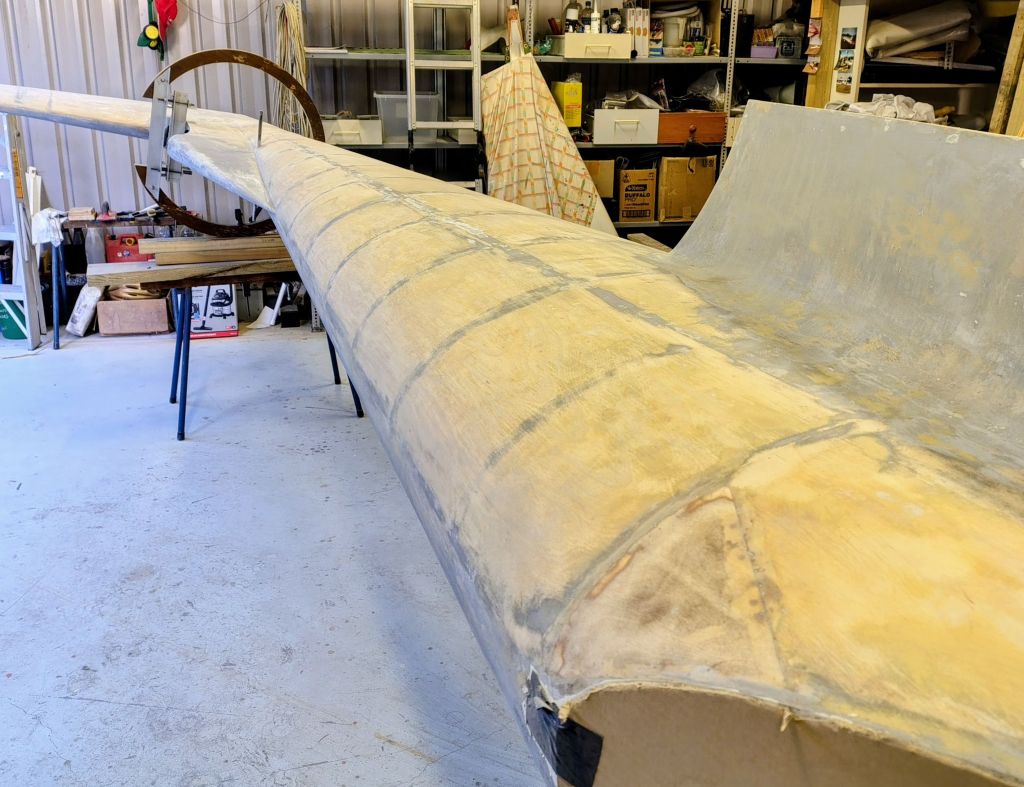
I then spent quite a few hours experimenting with sanding back the remnants under the easily removed enamel coat.
After trying hand-sanding and not getting anywhere fast, I tried my multitool sander, which improved the process significantly. I started gingerly with 120 grit but graduated to 80 grit after realising that the plywood was in fact coated with epoxy, i.e. was quite hard.
I went back to KYU’s logbook and established the following sequence of coatings:
The original ex factory system included an Epidian epoxy sealer/filler.
Then when Mike Burns repaired KYU in 2006, he applied a coat of Everdure epoxy wood sealer, followed by the grey automotive undercoat and Polytone finish coat.
There is a dark grey epoxy filler applied at the bulkhead/stringer/skin joints. I’m not sure whether that’s original or part of Mike Burns’ effort. In any case, it can’t be totally removed without going into the plywood.
In 2013, the finish coat was removed at STGC and replaced with Hichem enamel, which appears to be a local manufacturer for mainly automotive applications. That’s the coating which we removed easily with Pete’s patented acetone/gladwrap system.
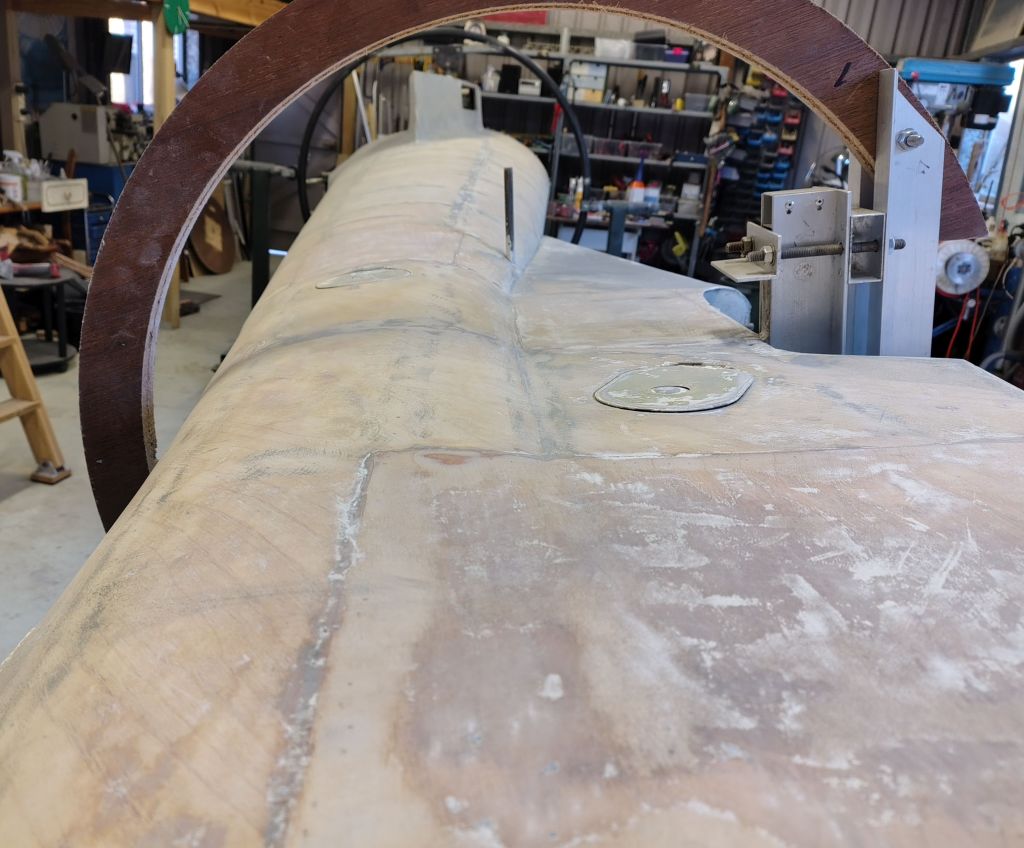
As well as the dark grey epoxy filler, a white filler was applied which doesn’t sand like microballons, being much more tenaciously bonded to the Everdure epoxy filler.
I have nearly finished one side of the fuselage and hope to be close to finished when Laurie gets back from Qld next Monday.
The archaeology exposed by sanding is very interesting, as all the repairs described in the logbook are unearthed. Despite the amount of work involved, I find this aspect of the job quite satisfying as the basic soundness of the structure is confirmed.
The fibreglass components are fairly tricky to sand, especially the nose cone. After a couple of hours sanding it still (or because of it?) looks like a dog’s breakfast, but will no doubt come good once we hit it with filler – microballoons most likely.
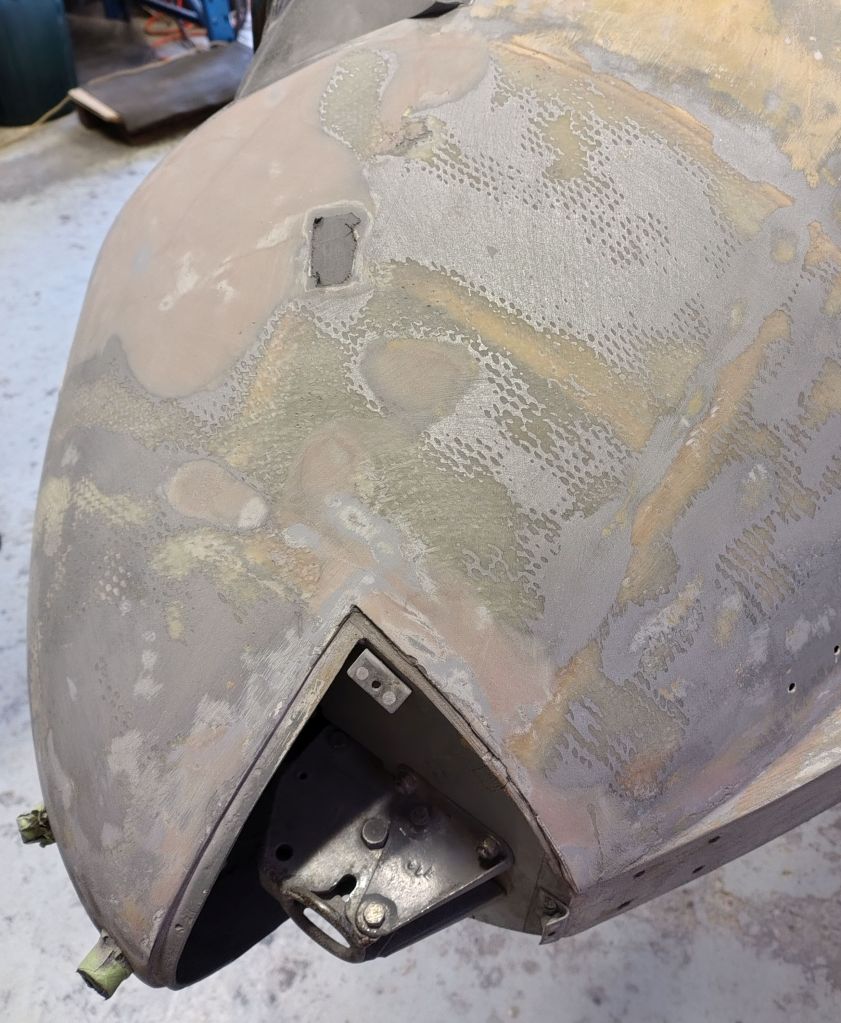
It seems all fibreglass is polyester-based, so applying epoxy over it should not be an issue.
 BOCIAN FLYERS
Leave a comment