Too humid for painting this morning so Plan B into action.
Laurie re-fitted the tailwheel, having replaced the bearings with new ones – old ones were a bit lumpy (I think that’s the correct technical term).
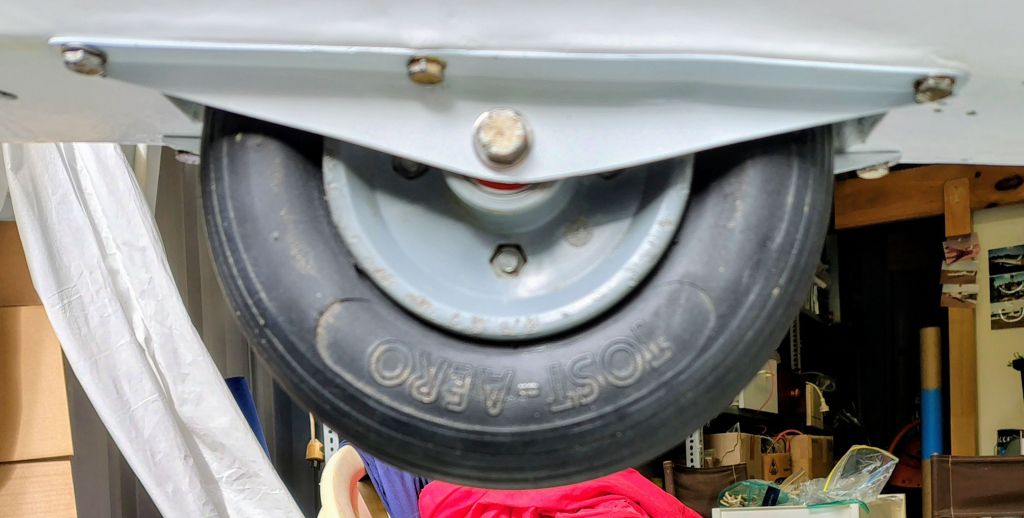
When we took that tailwheel and its mounting brackets off, I found that all the bolts are AN standard, AN3 for the brackets, AN4 for the axle. Checking the paperwork I found this was done by Mike Burns when he repaired KYU and modified the tailwheel.
Next we took off the front rudder pedals and their cover, which needs some TLC
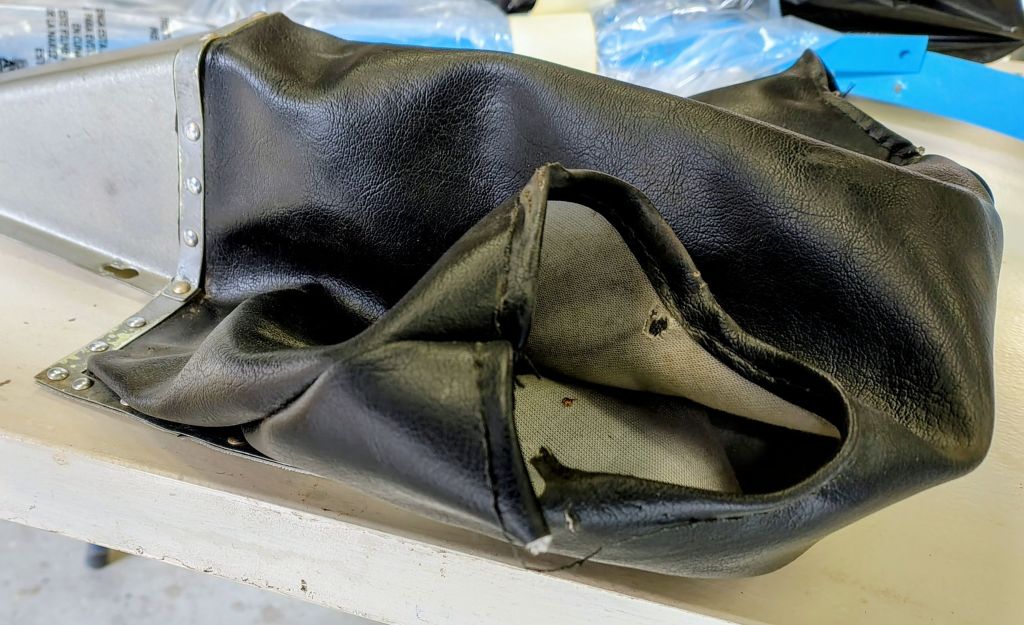
We also studied the mechanism to understand why there was a cut-out in that cover. Turns out it is for a pulley which contains the pedal return spring.
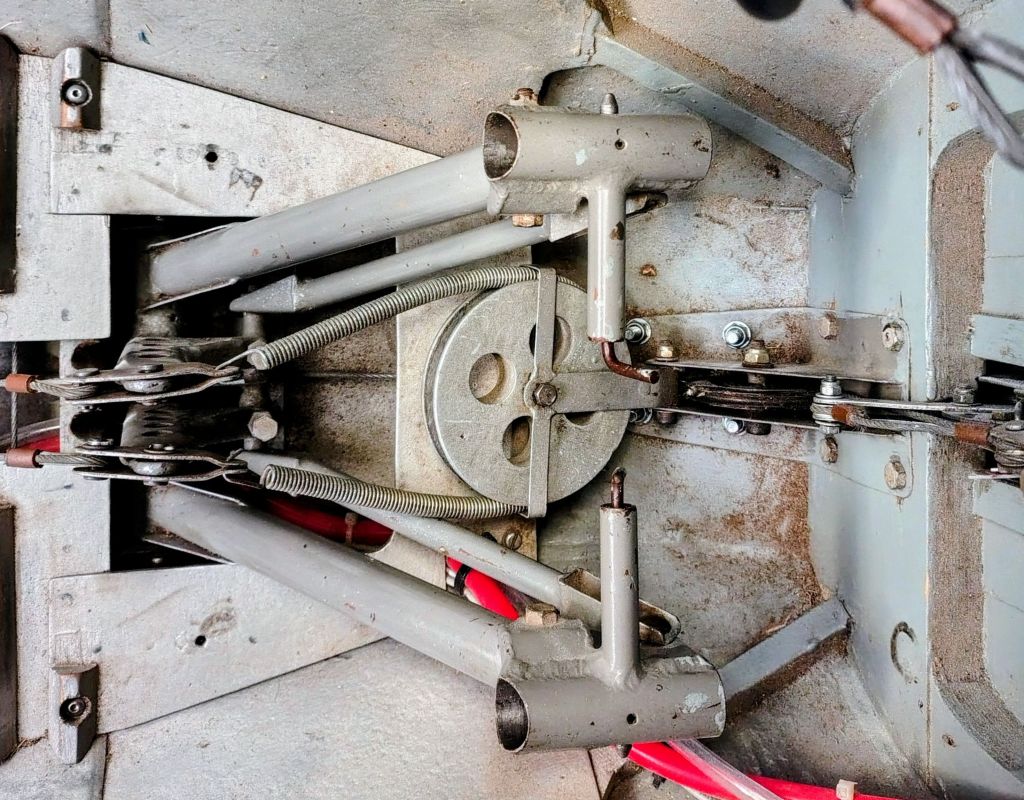
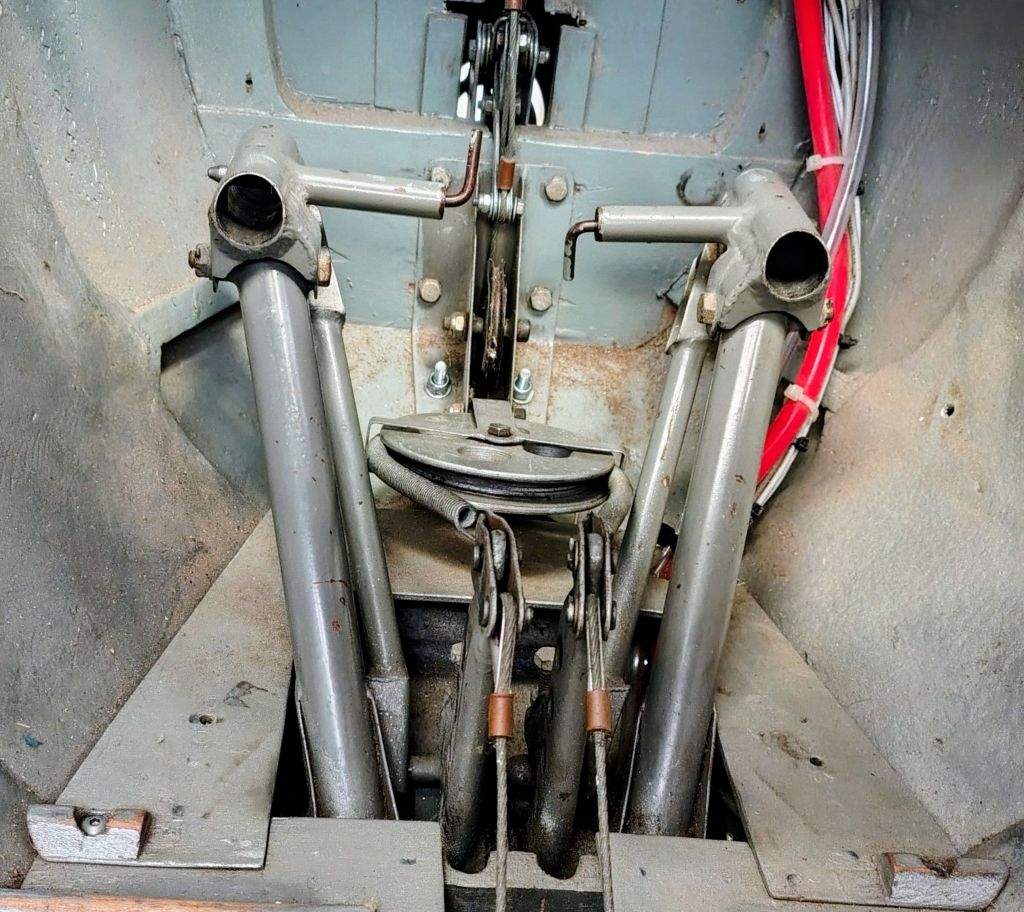
Having been notified that the new bungees are about to be delivered, we set to work cutting the old bungees off. I previously experienced a spectacular failure of a wheel suspension bungee in one our tugs at Southern Cross, VH-WOO, back in the 70’s, and was a bit apprehensive about this. I had calculated the force in those rubber bands at about 200 kg, so gingerly started to cut into the first one with a hacksaw blade. After I got past the halfway point, we could detect some minute movement, like a few millimeters. I waited after each incremental cut for the load to redistribute within the bungee thereby taking the tension out of it gradually.
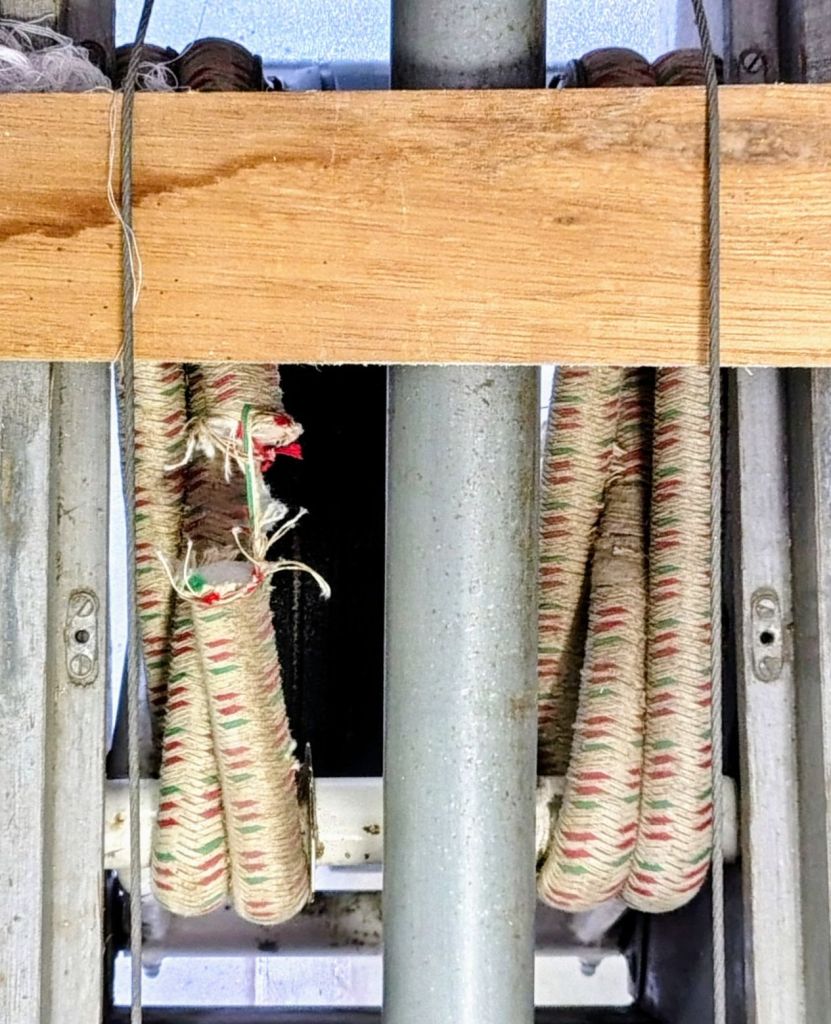
You can see that even with the entire rubber cross-section cut through, the band is still literally hanging by a thread of the woven fabric sleeve. With further scraping on that thread with the blade it finally let go of the last bit of tension with a rather pathetic little snap. The second one was attacked a bit more vigourously, but again it unsurprisingly behaved just like its starboard brother and gave up the ghost not with a bang but a whimper.
Next morning there was a knock on my front door. Our friendly parcel delivery driver presented a square parcel containing:
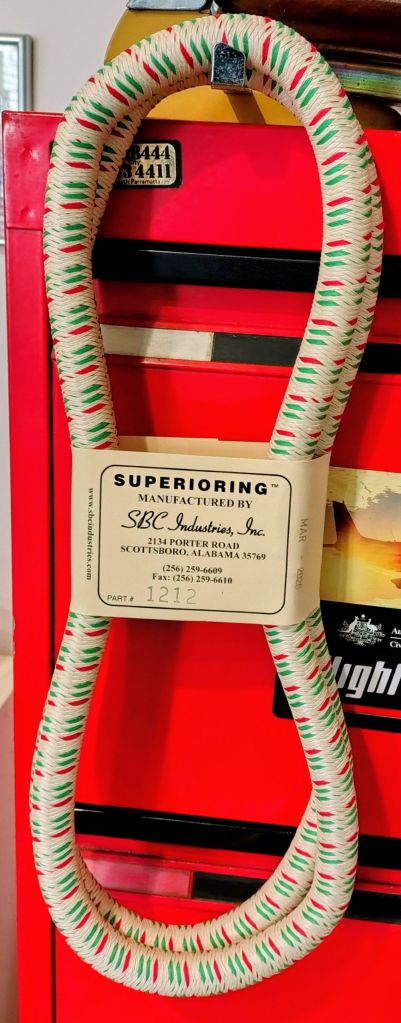
How’s that for timing? Brand spanking new Mil-C-5651D bungees, size 1212, colour coded to indicate year and month of manufacture. The fitting will be a bit exciting, remember the 200 kg load? That’s what has to be applied to get these critters onto the undercarriage tubes.
The dismantling of the undercart proved not to be straightforward – what else is new?
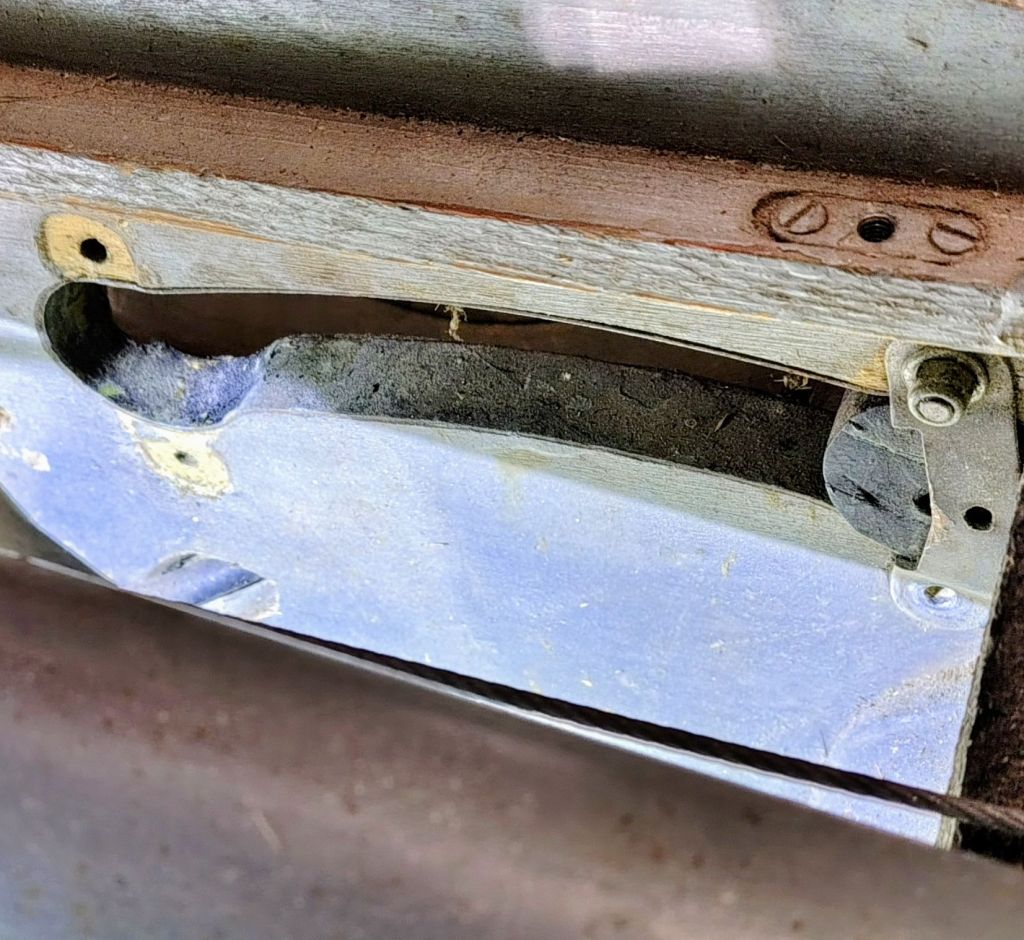
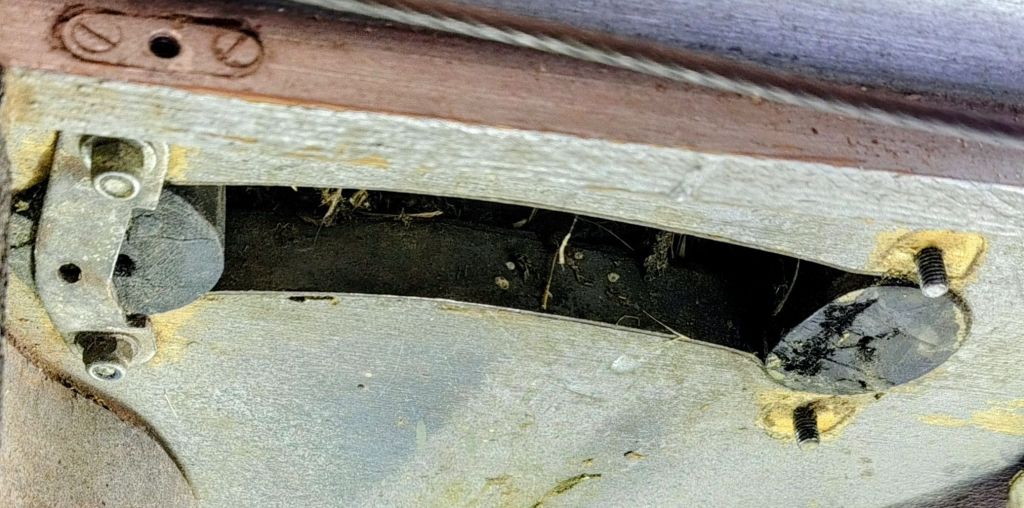
We’ll be replacing the rubber stops in the undercarriage shock absorber guide tracks and carry out minor fibreglass repairs to the covers for these tracks.


Leave a Reply